
GLP-1 therapy built on clinical evaluation, a personalized protocol, and follow-up that continues well past the first prescription.
Michael Painter, MMS, PA-C reviews your history first.
Designed for you — dose, pace, and plan.
Schedule follow-ups and adjustment as you progress.

GLP-1 therapy has changed how medicine approaches weight — but the way it's sold hasn't caught up. Most of what you'll find online is a checkout page. At PainterMed we show you proper GLP-1 therapy is, how it works, and what responsible care around it looks like.
GLP-1 stands for glucagon-like peptide-1, a hormone your body already produces. It helps regulate appetite, slows how quickly the stomach empties, and supports how the body manages insulin and blood sugar. GLP-1 medications work with that system — which is why many patients describe the effect less as willpower and more as quiet: food noise settles, portions shrink naturally, and eating becomes a decision rather than a compulsion. This is not diet culture, and it is not a shortcut. It is metabolic medicine, and like any medicine, it deserves proper clinical attention.
That attention is where GLP-1 care most often ends. Dosing that escalates on a fixed schedule instead of your response. Side effects managed by FAQ pages. No labs, no adjustment, no one to call. At PainterMed, GLP-1 therapy begins with an evaluation by Michael Painter, MMS, PA-C — your history, medications, and goals — and continues with a personalized protocol, scheduled follow-up, and dosing that moves at the pace your body sets. The medication matters. The clinical judgment around it matters more.
It starts with an evaluation, not an order form. Michael Painter, MMS, PA-C reviews your medical history, current medications, prior GLP-1 experience, and goals before anything is prescribed. From that, he builds your protocol: a starting dose matched to your history and a titration plan paced by your response — not a fixed calendar.
Then the part most programs skip: follow-up. Scheduled visits to review progress, manage side effects, and adjust your protocol as your body responds. Between visits, you have direct access to your clinician — a message, not a ticket queue. Every step is one person’s clinical judgment, applied to you.

Treatment is prescribed only after evaluation by a licensed clinician. If a prescription is appropriate, it is sent to a licensed dispensing pharmacy, which prepares the medication and ships it to you. Reorders are managed through scheduled follow-up evaluations and are never automatically renewed.
Peptide therapy is prescribed only when clinically appropriate, after a full patient evaluation.
Safety Info: Peptide and compounded therapies carry risks and are not appropriate for everyone. They are not FDA-approved or reviewed for safety before marketing, and a consult determines whether any protocol is right for you.
15 years of clinical experience behind every protocol decision.
Individual experiences vary. Every protocol decision is made through clinical evaluation.
Most patients start at a conservative dose while the body adjusts. Appetite changes and mild digestive effects are common early on — this is expected, and it's exactly what your first follow-up reviews.

Dose changes happen when your response supports them, not on a preset schedule. At each check-in, Michael reviews how you're feeling, how you're tolerating the medication, and whether your protocol should hold, adjust, or pause.
GLP-1 therapy is effective medicine, which means it isn’t right for everyone. Every PainterMed evaluation screens your full history before anything is prescribed, and if this therapy isn’t appropriate for you, that’s what you’ll hear.




GLP-1 therapy uses prescription medications that work with a hormone your body already produces , glucagon-like peptide-1 — to regulate appetite, slow stomach emptying, and support blood sugar control. It is prescribed medicine, not a supplement, and requires clinical evaluation, an individualized dose, and ongoing monitoring.
GLP-1 medications reduce appetite and increase satiety by acting on the body’s own hunger-regulation signals. Many patients describe less preoccupation with food and smaller natural portions. The medication supports change — it doesn’t replace it — which is why protocols pair it with clinical follow-up and lifestyle guidance.
No responsible clinician can promise a number. Response varies with your health history, dose, protocol, and habits. What a well-run protocol can promise is this: a dose matched to you, adjustments based on your actual response, and a clinician reviewing your progress rather than a fixed schedule deciding it.
Candidacy is determined by medical evaluation, not a quiz. Your clinician reviews your health history, current medications, and goals — and screens for conditions that rule out GLP-1 therapy. At PainterMed, Michael Painter, MMS, PA-C conducts that evaluation personally, and if the therapy isn’t appropriate for you, he’ll tell you.
The most common side effects are digestive — nausea, constipation, or reflux — especially in early weeks and after dose increases. Most are manageable with pacing and dose adjustment, which is why monitored titration matters. Serious risks exist and are screened for during evaluation and discussed before you start.
Appetite typically returns toward baseline when the medication stops, which is why an exit isn’t an afterthought — it’s part of the protocol. Whether you’re adjusting, pausing, or tapering, those decisions are made with your clinician based on your progress, not left for you to navigate alone.
No. PainterMed is a telemedicine practice serving patients across Florida. Your evaluation, follow-up visits, and between-visit communication all happen remotely. If a prescription is appropriate, it is sent to a licensed dispensing pharmacy, which prepares the medication and ships it to you directly. You get the attention of a concierge practice without the waiting room.
A real medical evaluation: your history, current medications, prior GLP-1 experience, and goals — reviewed directly with Michael Painter, MMS, PA-C. You’ll leave understanding whether the therapy is appropriate for you and what your protocol would look like. It’s an evaluation, not a sales call.
Most online programs are built around the transaction: a form, an algorithm, and a box. PainterMed is built around the protocol: a founder-led evaluation, dosing paced by your response, scheduled follow-up, and direct access to your clinician between visits. You’re a patient here, not an order number.
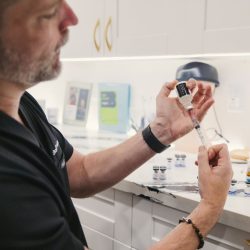
Evaluation, personalization, monitoring, adjustment — the four things that separate a medical protocol from a product subscription, and why each one matters to your outcome.

Who evaluates you? What gets screened? Who do you talk to after the prescription? A short guide to telling clinician-led care from a checkout page — wherever you start.

Metabolic health, hormones, recovery, cellular energy — the categories overlap more than the internet suggests. How a clinical evaluation matches treatment to your history, your labs, and your goals instead of a trending protocol.
What Michael reviews before anything is prescribed, the questions you should come with, and what you’ll understand about your options by the end of the visit.